

Living in compact apartments or working in tiny offices doesn’t mean sacrificing air quality. Nature has provided us with beautiful, efficient air purifiers that thrive in limited spaces while actively removing toxins from our environment.
These botanical air cleaners not only enhance our surroundings aesthetically but also contribute significantly to our physical and mental well-being. Let’s explore the most effective air-purifying plants that can transform even the smallest spaces into fresher, healthier environments.
Understanding How Plants Purify Air
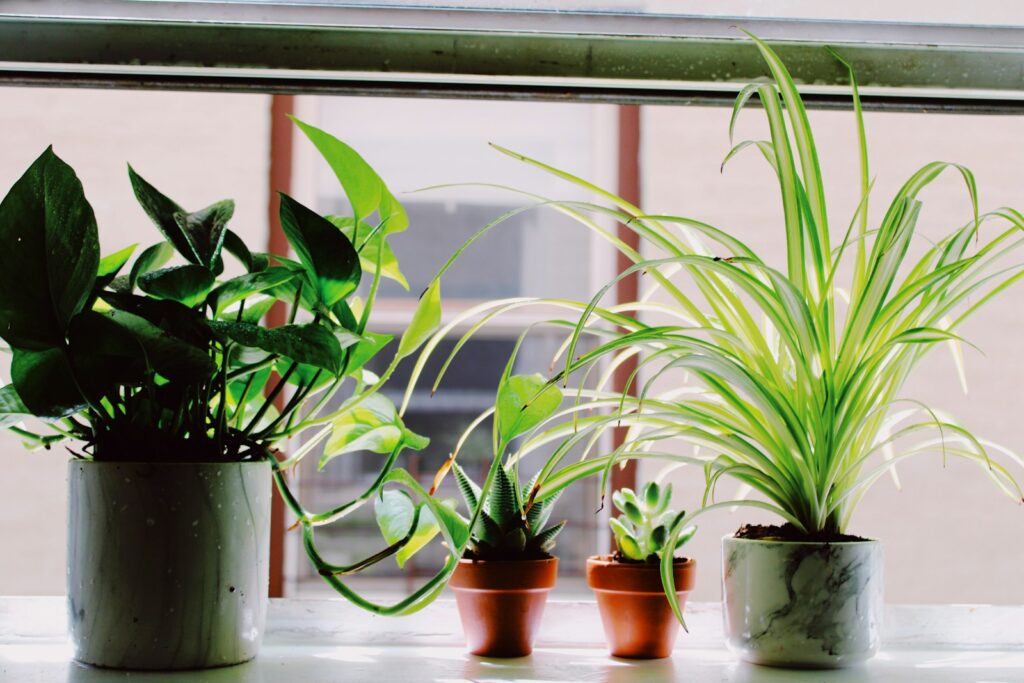
Plants function as natural air purifiers through a remarkable process that combines photosynthesis with phytoremediation. During photosynthesis, plants absorb carbon dioxide and release oxygen, immediately improving air quality. More impressively, through phytoremediation, certain plants can absorb volatile organic compounds (VOCs) like formaldehyde, benzene, and trichloroethylene through their leaves and roots, effectively filtering these harmful substances from our indoor environments.
NASA’s Clean Air Study, conducted in the late 1980s, scientifically validated these air-purifying capabilities, identifying numerous houseplants that excel at removing common indoor pollutants. This natural filtration system works continuously, with plants becoming more effective air purifiers the longer they remain in your space.
Snake Plant or Sansevieria trifasciata
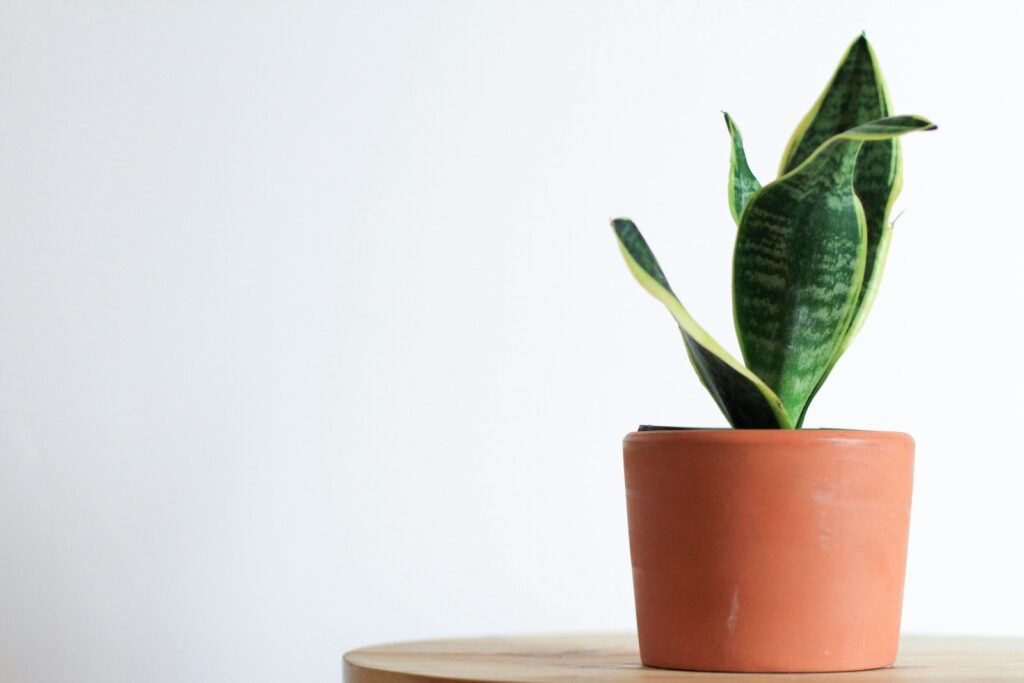
The Snake Plant, also known as Mother-in-Law’s Tongue, stands as one of the most resilient and effective air purifiers available for small spaces. This architectural beauty specializes in filtering formaldehyde, nitrogen oxide, benzene, and xylene from indoor environments, even during nighttime hours when most plants cease oxygen production. Its vertical growth pattern makes it ideal for corners, narrow shelves, or tight spaces where horizontal spread would be problematic.
Snake plants require minimal maintenance, thriving in low light conditions and needing watering only when their soil becomes completely dry. Their striking appearance, featuring tall, sword-like leaves with yellow edges, adds a modern, sculptural element to any interior design scheme.
Peace Lily or Spathiphyllum
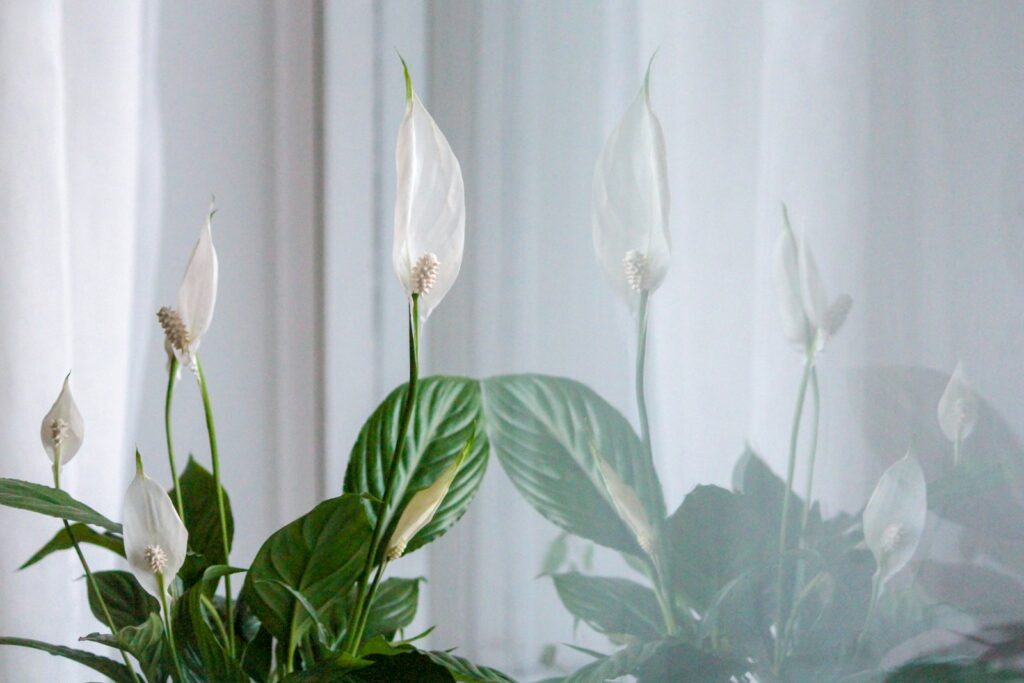
The elegant Peace Lily combines beautiful flowering capabilities with powerful air-purifying properties, making it a perfect addition to small apartments or office spaces. These compact plants excel at removing common household pollutants including ammonia, benzene, formaldehyde, and trichloroethylene, while their high transpiration rate helps increase humidity levels in dry environments. Peace Lilies thrive in low to medium light conditions, making them suitable for bathrooms, bedrooms, or offices with limited natural light.
Their distinctive white “flowers” (actually modified leaves called spathes) provide visual interest year-round and tend to bloom several times annually with proper care. As an added benefit, Peace Lilies act as natural indicators of watering needs by visibly drooping when thirsty, eliminating the guesswork from their maintenance routine.
Spider Plant or Chlorophytum comosum
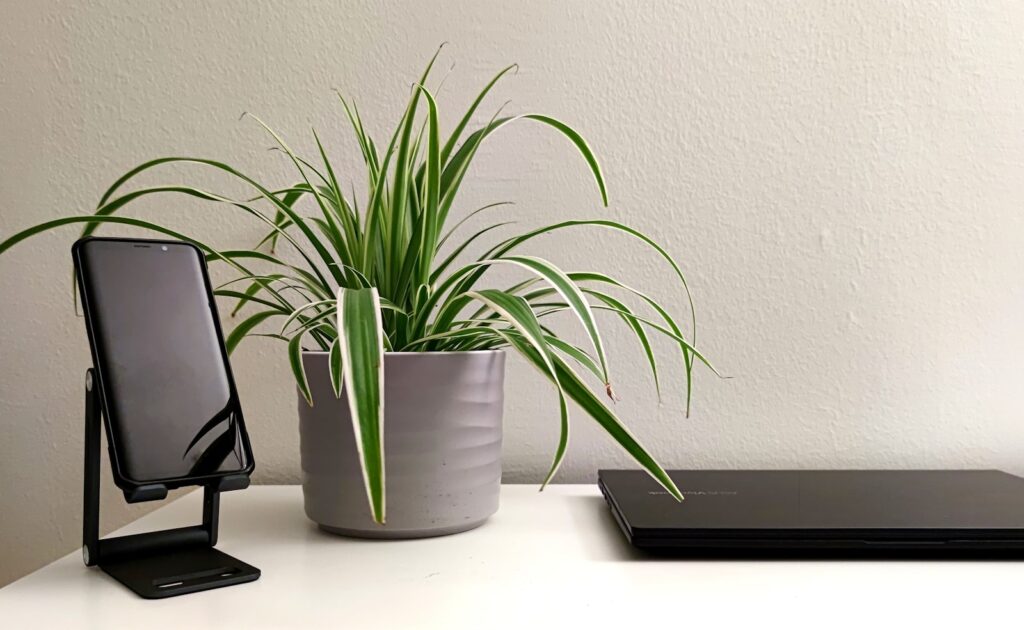
The Spider Plant has earned its reputation as one of the most adaptable and prolific air purifiers for small spaces. Its cascading arched leaves with distinctive white stripes make it perfect for hanging baskets or elevated shelves where its “spiderettes” (baby plants) can elegantly dangle down. Research shows spider plants remove significant amounts of carbon monoxide, formaldehyde, xylene, and toluene from indoor environments, with their purification ability increasing as the plant matures.
These resilient plants thrive in bright indirect light but tolerate lower light conditions, making them versatile for various locations within a small home or office. Spider plants also produce numerous offshoots that can be easily propagated, allowing you to multiply your air-purifying army without purchasing additional plants.
Pothos or Epipremnum aureum
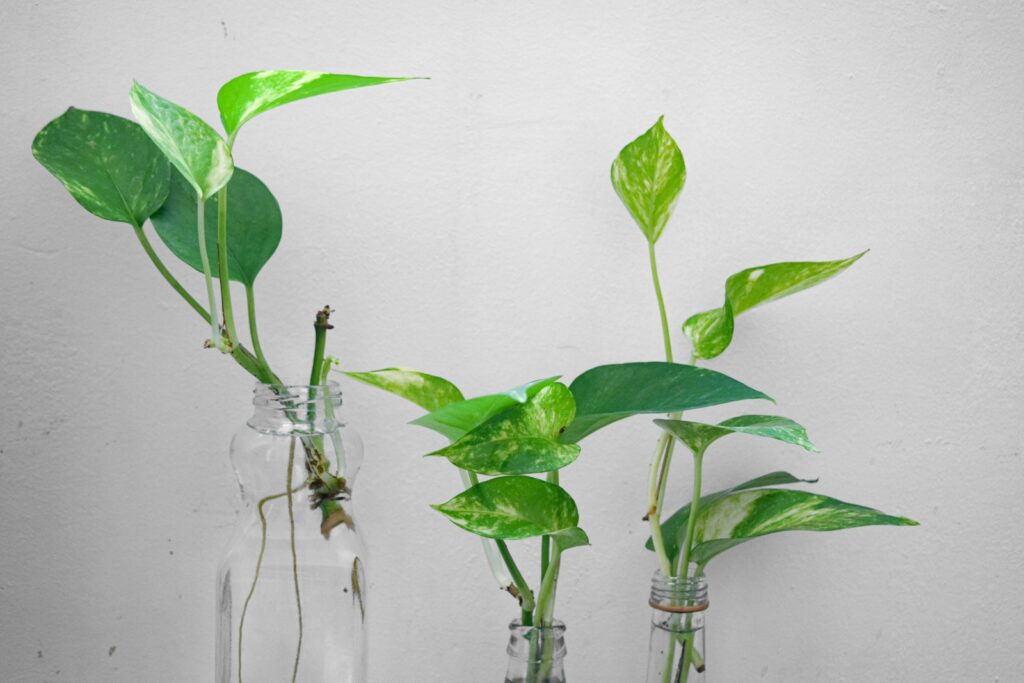
Pothos, sometimes called Devil’s Ivy, represents the perfect combination of air-purifying power and adaptability for compact living spaces. This trailing vine efficiently filters formaldehyde, benzene, and carbon monoxide from indoor air, with its purification capabilities increasing as the vine grows longer. Pothos thrives in almost any light condition from low to bright indirect light, making it suitable for nearly any spot in a small apartment or office.
Its trailing growth habit makes it ideal for placement on high shelves, hanging planters, or wall-mounted pots where it can cascade down without consuming precious floor space. Available in varieties with golden, marble, neon, or jade coloration, pothos offers aesthetic options to complement any interior design scheme while actively improving air quality.
Boston Fern or Nephrolepis exaltata
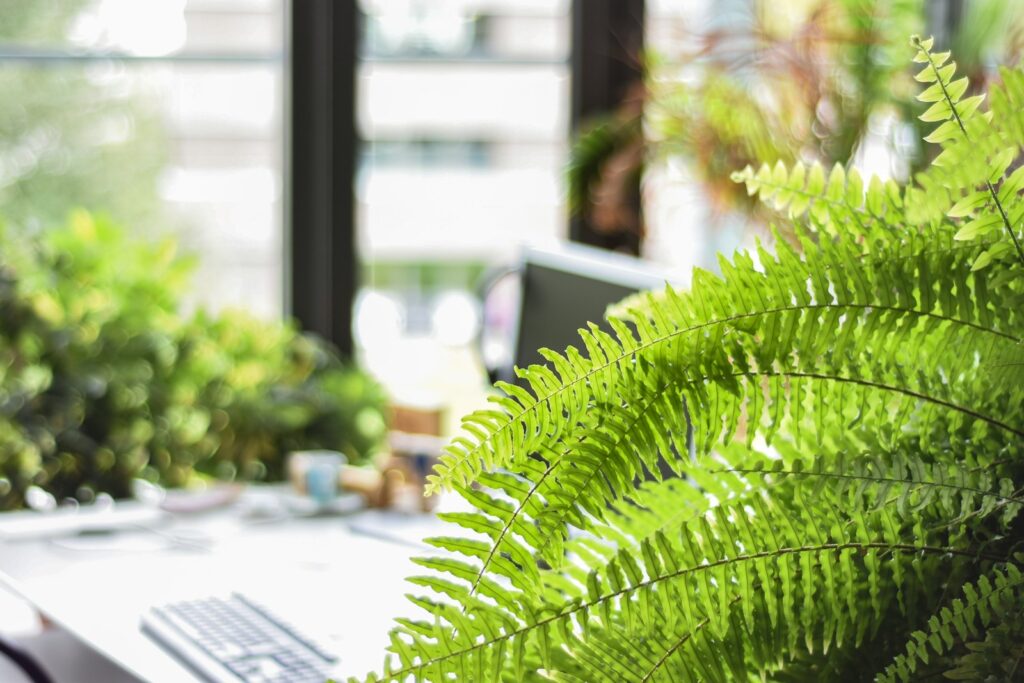
The Boston Fern stands out as a humidity-loving air purifier particularly effective at removing formaldehyde, which commonly off-gasses from pressed wood products, certain fabrics, and many household cleaning products. Its lush, feathery fronds create a dramatic cascading effect, making it perfect for hanging baskets in small spaces where it won’t consume valuable surface area. Boston Ferns thrive in environments with high humidity, making them excellent choices for bathrooms or kitchens where they simultaneously enhance air quality and benefit from the naturally higher moisture levels.
Research indicates these ferns also effectively filter xylene and toluene, chemicals commonly found in paints, nail polishes, and many adhesives. While requiring more consistent moisture than some other plants on this list, their exceptional air-purifying capabilities and striking appearance make them worth the additional attention.
Rubber Plant or Ficus elastica
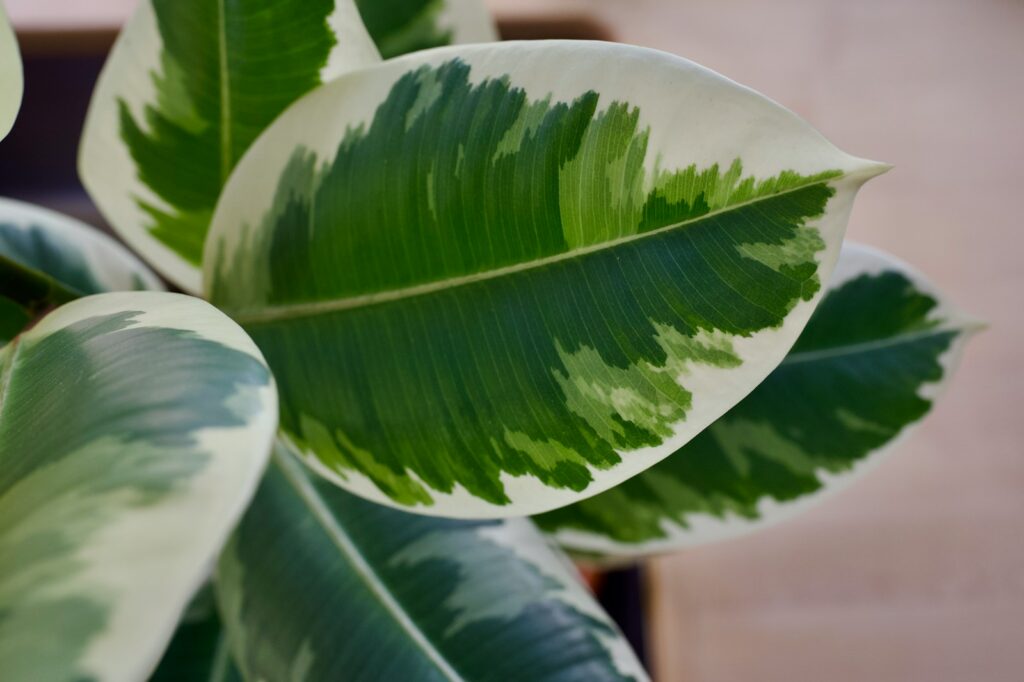
The Rubber Plant offers powerful air purification in a compact, upright growth pattern ideal for small spaces with limited floor area. These striking plants efficiently eliminate formaldehyde from indoor environments while adding a bold, architectural element with their large, glossy leaves that range from deep green to burgundy depending on the variety. Rubber plants grow vertically rather than spreading outward, allowing them to fit neatly in narrow corners or alongside furniture without consuming valuable square footage.
While they can potentially grow quite tall, rubber plants respond well to pruning, enabling you to maintain them at your desired height for years. Their thick, leathery leaves also make them relatively low-maintenance, requiring less frequent watering than many other houseplants while still actively improving your air quality.
Aloe Vera
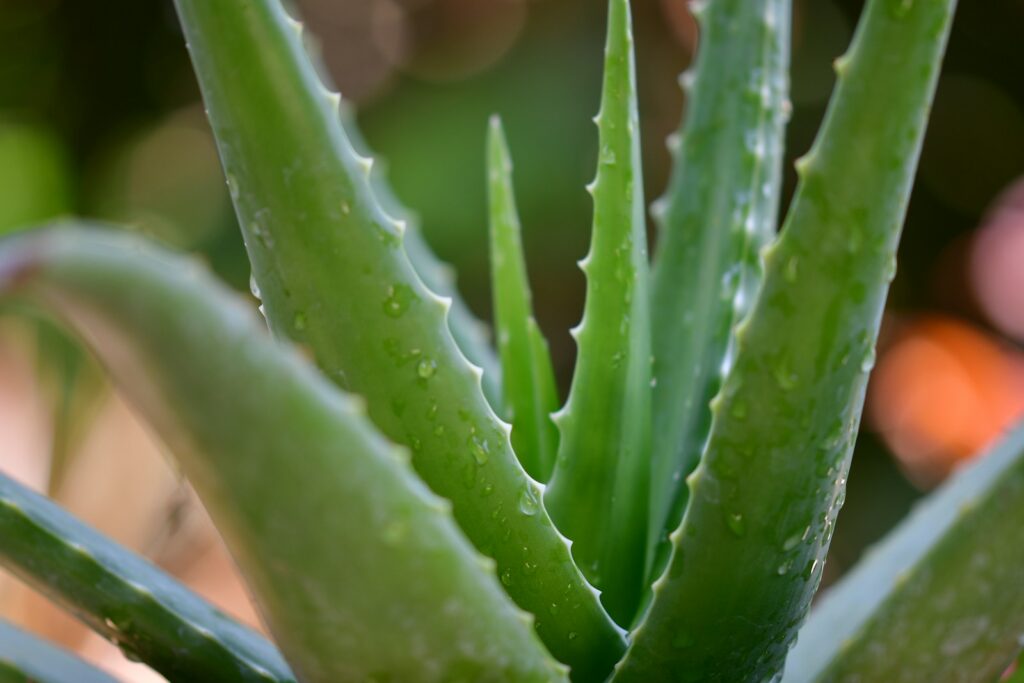
Aloe Vera serves as a multifunctional plant for small spaces, combining powerful air purification properties with practical medicinal benefits. This compact succulent efficiently removes formaldehyde and benzene from indoor environments while requiring minimal space on a sunny windowsill or small table. Aloe’s air-purifying abilities come with the added advantage of providing visible health indicators – its leaves develop brown spots when excessive amounts of harmful chemicals are present in your environment.
As a succulent, aloe vera requires minimal watering and maintenance, making it perfect for busy individuals or those new to plant care. Beyond its air-cleaning capabilities, having aloe readily available provides immediate treatment for minor burns, cuts, or skin irritations, making it perhaps the most practical air purifier for small living spaces.
Chinese Evergreen or Aglaonema
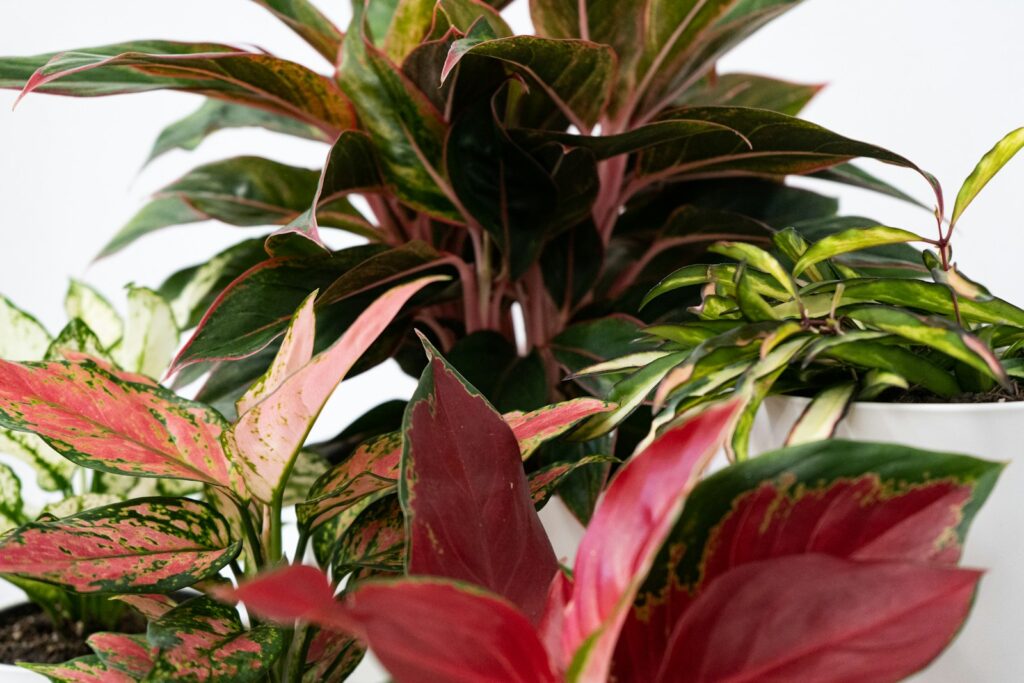
The Chinese Evergreen represents an ideal choice for air purification in low-light corners of small apartments or offices. These compact plants efficiently filter benzene, formaldehyde, and other common indoor pollutants while thriving in conditions that would challenge many other houseplants. Chinese Evergreens come in various attractive patterns and colors, from silver-speckled green to varieties with striking pink or red variegation, allowing them to serve as decorative elements while cleaning your air.
Their relatively slow growth rate means they won’t quickly outgrow their designated space, remaining appropriately sized for small areas for years with minimal maintenance. Chinese Evergreens also tolerate a wide range of humidity levels and recover well from occasional neglect, making them particularly suitable for busy individuals or those new to plant care.
English Ivy or Hedera helix
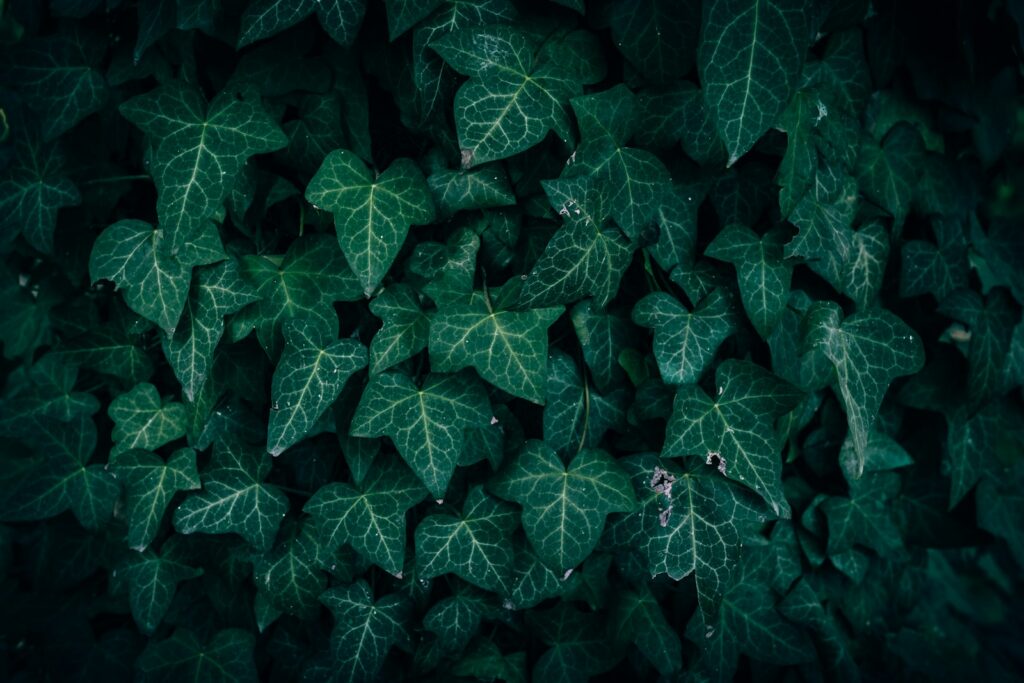
English Ivy serves as an exceptional air purifier for small spaces, particularly effective at removing airborne mold particles and fecal matter, making it especially valuable in bathrooms or near pet areas. Studies show it significantly reduces formaldehyde levels, which commonly off-gas from many household products including paper products, synthetic fabrics, and certain wood finishes. English Ivy’s trailing growth habit makes it perfect for wall-mounted planters, hanging baskets, or elevated shelves where it can cascade down without consuming valuable surface space in compact rooms.
Available in numerous varieties with different leaf patterns, sizes, and colorations, English Ivy offers aesthetic versatility while actively purifying your environment. While requiring consistent moisture and preferring bright indirect light, its exceptional air-cleaning capabilities make it worth incorporating into small living spaces where air quality concerns exist.
Bamboo Palm or Chamaedorea seifrizii

The Bamboo Palm brings tropical air-purifying power to small spaces, effectively filtering benzene, formaldehyde, carbon monoxide, and chloroform from indoor environments. Despite its robust purification capabilities, this palm maintains a relatively compact footprint compared to other palms, with multiple stems growing vertically rather than spreading outward, making it suitable for tight corners or narrow spaces. Bamboo Palms thrive in medium to bright indirect light but tolerate lower light conditions better than many other palms, providing flexibility for placement in small apartments or offices.
Their feathery fronds add a touch of tropical elegance while creating a natural humidifier effect, releasing moisture that benefits both your respiratory system and any nearby plants. With proper care, a single Bamboo Palm can serve as an effective air purifier for years, making it a worthwhile investment for improving indoor air quality in compact living situations.
ZZ Plant or Zamioculcas zamiifolia
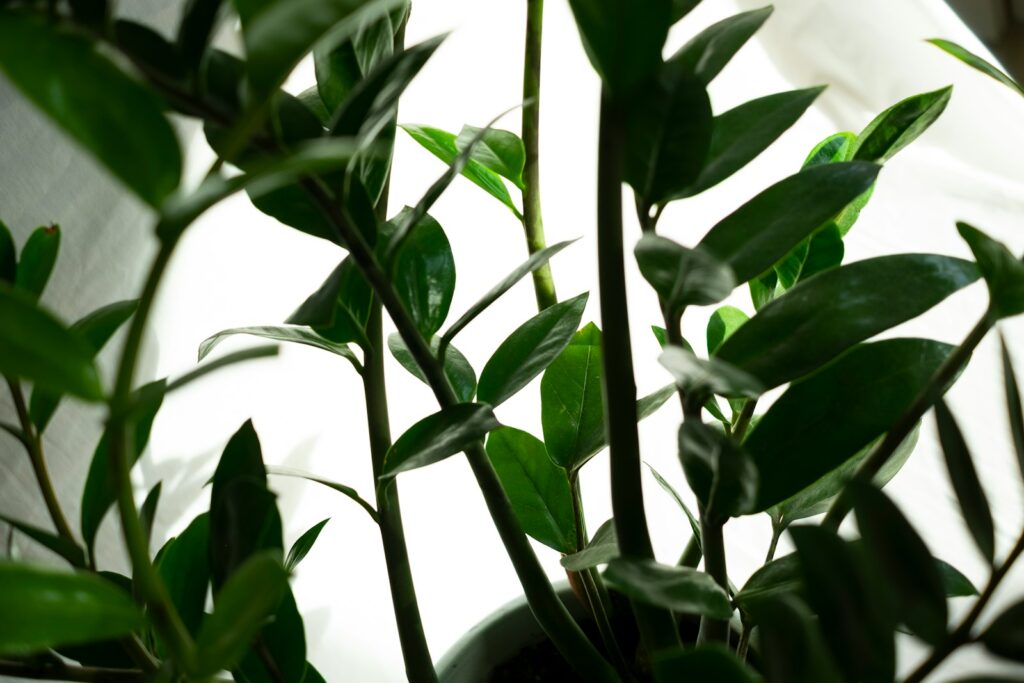
The ZZ Plant stands as perhaps the most indestructible air purifier available for challenging small spaces with limited light or irregular care schedules. This remarkable plant removes significant amounts of xylene, toluene, and benzene from indoor environments while requiring minimal attention due to its drought-tolerant rhizome system that stores water for extended periods. ZZ Plants thrive in low light conditions that would cause most other plants to struggle, making them perfect for dark corners, windowless bathrooms, or office cubicles far from natural light sources.
Their naturally compact, symmetrical growth pattern creates an architectural element that fits neatly on small tables, shelves, or narrow floor spaces without becoming unruly. The glossy, deep green leaves remain attractive year-round with minimal maintenance, providing continuous air purification even when you’re too busy to provide consistent plant care.
Creating an Effective Plant Arrangement for Maximum Air Purification
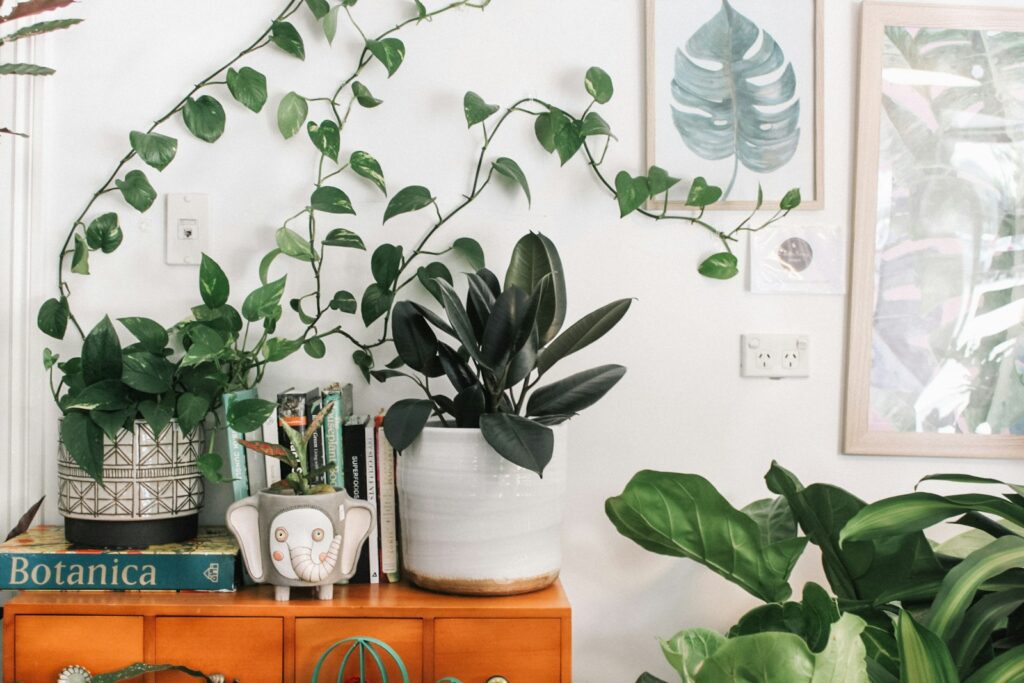
Strategically arranging multiple air-purifying plants creates a natural filtration system far more effective than isolated specimens. For optimal air quality improvement in small spaces, aim to incorporate at least one plant per 100 square feet, positioning varieties with different purification specialties near their corresponding pollution sources. Place formaldehyde-filtering plants like Boston Ferns near new furniture or recently renovated areas, while locating benzene-removing plants like Peace Lilies near printers or recently painted surfaces.
Creating multi-level displays with hanging plants, tabletop specimens, and floor plants maximizes your air-cleaning capacity without consuming valuable floor space. Remember that proper air circulation helps plants filter more effectively, so occasionally running a small fan enhances their purification capabilities. By thoughtfully combining various species rather than relying on a single plant type, you create a comprehensive air-purifying ecosystem that addresses multiple pollutants simultaneously.
Creating Cleaner Healthier Spaces with Air Purifying Plants
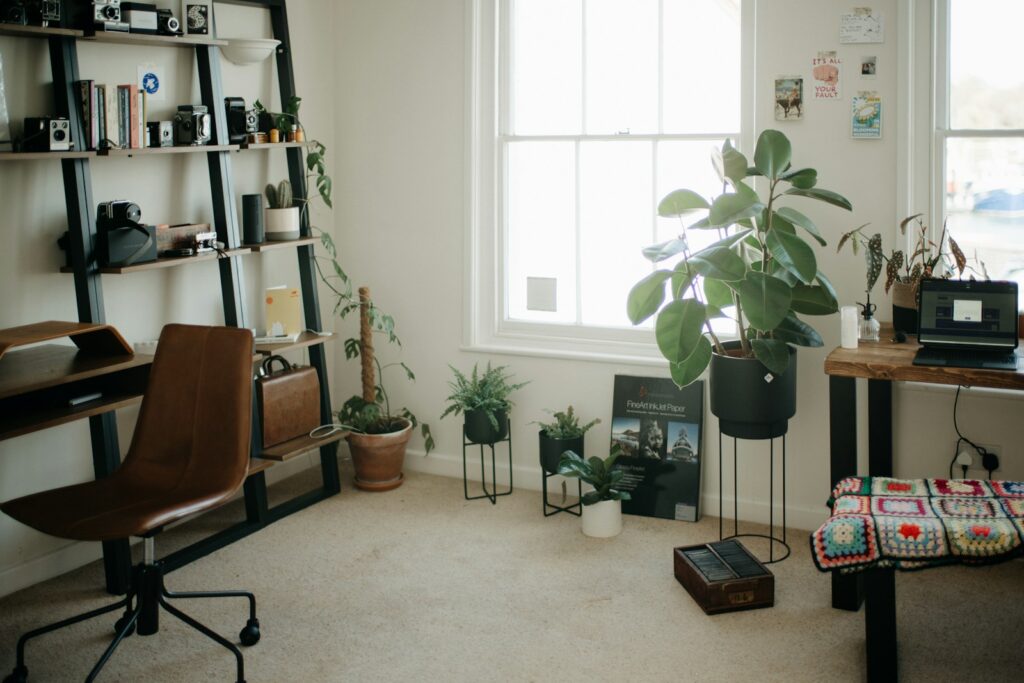
Incorporating air-purifying plants into small living spaces offers a natural, aesthetically pleasing solution to indoor air pollution. These botanical air cleaners not only remove toxins and produce oxygen but also enhance our mental well-being through their connection to nature. By selecting the right varieties for your specific conditions and arranging them strategically throughout your space, even the smallest apartment or office can benefit from significantly improved air quality.
Remember that consistency is key—a few well-maintained plants will provide better air purification than many neglected ones. With minimal investment and space commitment, these living air purifiers offer an accessible way to create a healthier indoor environment regardless of your square footage constraints.